Best Foods for Menopause Belly Fat: A Practical, Evidence-Based Guide
No single grocery item targets the soft layer that settles around the waist in midlife. But food still shapes how full you feel, how steady your energy stays, how much muscle you keep, and your overall body fat over months. The best foods for menopause belly fat work through patterns, not magic ingredients.
Why Belly Fat Often Increases During Menopause
Two shifts collide in midlife. The first is hormonal. As estrogen declines, fat storage moves from the hips and thighs to the abdomen, including the deeper visceral fat around organs. The second is structural. Muscle mass falls after 30 unless actively maintained, and a smaller muscle pool burns fewer calories at rest.
Sleep also fragments in perimenopause, and broken sleep nudges appetite hormones the next day. Stress runs higher in the forties and fifties, and high cortisol has its own link to visceral fat. Combined, these shifts change the math of weight maintenance, often without the diet changing at all.
Menopause belly fat is not just cosmetic. Visceral fat tracks with cardiometabolic risk markers, including insulin resistance and blood pressure changes. Addressing it matters beyond how clothes fit.
Check out Menopause Weight Loss: Tips for Shedding Pounds Effectively.
What “Best Foods” Really Means in This Context
Here is where most articles get it wrong. There is no flat belly food. No spice, smoothie, or supplement burns abdominal fat on its own. Anyone promising fast spot reduction is selling something.
The useful framing is different. Food affects body composition through four levers: fullness, protein intake to protect muscle, steady blood sugar, and the overall pattern across the week. A consistent dietary pattern of whole, mostly minimally processed foods does more for menopausal belly fat than any single ingredient.
The Mediterranean pattern has the strongest evidence base for cardiometabolic health in midlife women. It emphasizes vegetables, legumes, whole grains, fish, nuts, olive oil, and modest dairy, with little red meat or ultra-processed food. That framework anchors most of what follows.
Explore How to Get Rid of Menopause Belly Effectively

Best Foods to Focus On
Rather than a checklist, think in food groups that earn their place at most meals.
Protein for Satiety and Muscle Preservation
Protein needs rise in midlife, and many women fall short. Adequate intake supports muscle retention during weight loss, which matters because losing weight without protecting muscle leaves you smaller but not necessarily healthier. Protein also blunts hunger more reliably than carbs or fat.
Useful sources include eggs, Greek yogurt, cottage cheese, fish, poultry, tofu, tempeh, edamame, lentils, beans, and modest portions of lean red meat. Spreading protein across the day, rather than loading it at dinner, appears to support muscle protein synthesis better after 50.
High-Fiber Foods That Steady Blood Sugar
Fiber slows digestion, supports gut bacteria linked to metabolic health, and helps blood sugar rise more gradually after meals. Steadier blood sugar means fewer insulin spikes, which matters for both hunger and fat storage.
The best menopause belly fat foods in this group are most vegetables, berries, apples, pears, beans, lentils, chickpeas, oats, barley, quinoa, and whole-grain breads with visible seeds. Most midlife women do well with 25 to 35 grams of fiber daily, a meaningful jump from the typical North American intake of around 15 grams.
Healthy Fats That Support Hormonal and Heart Health
Fat is not the enemy of a flatter stomach. The right fats help with satiety and may improve some lipid markers that shift after menopause.
Extra virgin olive oil, avocados, walnuts, almonds, pistachios, ground flaxseed, chia seeds, and oily fish (salmon, sardines, and mackerel) earn regular spots. The omega-3 fats in oily fish have specific evidence for cardiometabolic markers, which is why two servings per week appear in most heart guidelines.
Minimally Processed Whole Foods
The pattern matters more than any single food. Meals built around recognizable ingredients (a piece of fish, a bowl of beans, roasted vegetables, or berries) come out lower in calories, higher in protein and fiber, and more satisfying than the same calories from packaged items. It is about what your appetite responds to.
This way of eating overlaps with healthy aging research, which favors plant-forward patterns rich in polyphenols and slow-digesting carbohydrates. The same plate supports cardiovascular and cognitive health alongside body composition.
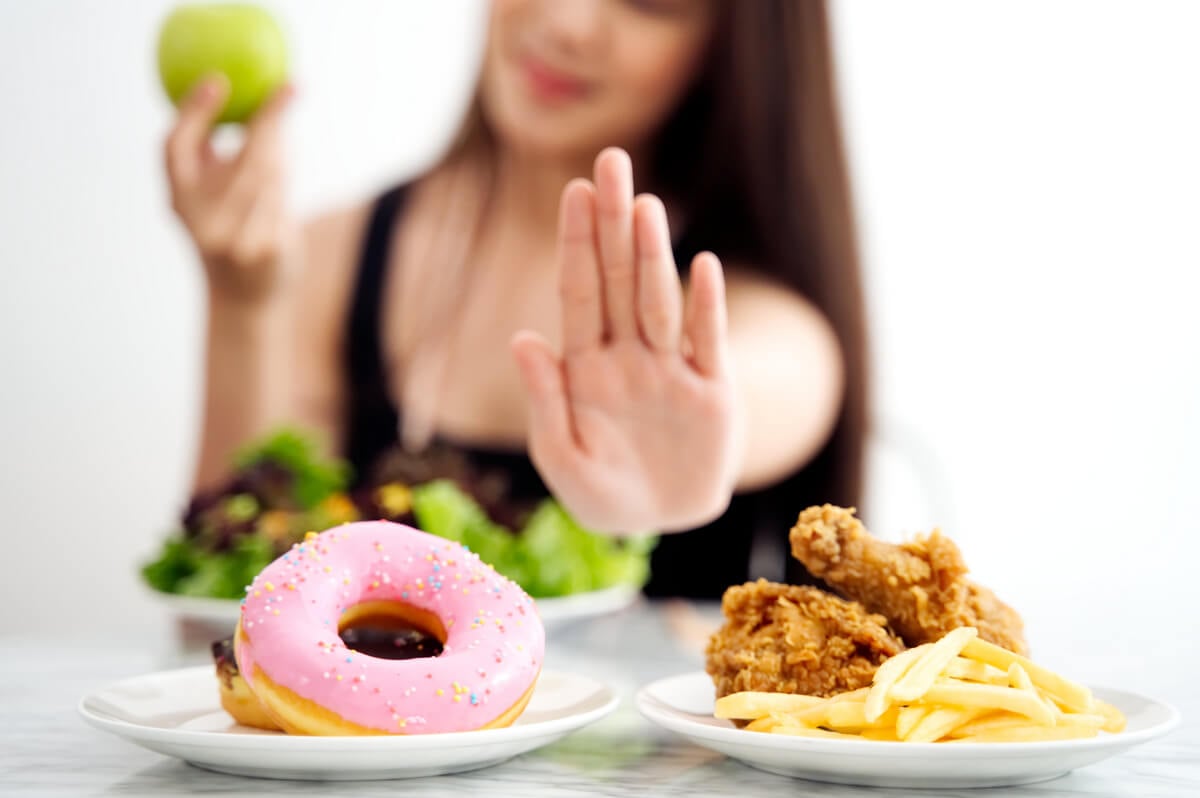
Foods and Habits That May Make Belly Fat Harder to Manage
The other side of the picture is what crowds out the good stuff. None of this is about banning specific items. It is about noticing what pulls body composition in the wrong direction during menopause.
- Ultra-processed foods (packaged snacks, sweetened cereals, processed meats, sugary baked goods) deliver lots of calories with little fiber or protein. They are designed to bypass satiety signals, so portions creep up without registering as fullness.
- Sugary drinks, including specialty coffees and fruit juices, add liquid calories that do little for hunger. Alcohol does the same and disrupts sleep, which compounds midlife fatigue.
- Grazing without true hunger is another quiet driver. Low-grade snacking keeps insulin elevated and makes any small deficit harder. Skipping meals and overeating later creates the same problem in reverse.
- Poor sleep and stress amplify all of this. Sleep loss raises ghrelin (the hunger hormone) and lowers leptin (the fullness signal), biasing the next day’s choices toward higher-calorie foods. Stress eating is not a willpower failure. It is a physiological response that food planning alone cannot fully override.
How to Build Meals That Support Body Composition
A workable template removes most of the daily decision fatigue. The structure is simple: a clear protein source, a generous helping of vegetables, a portion of whole-grain or starchy carbs sized to your activity, and a thumb-sized amount of healthy fat. This is the practical version of the best diet for menopause belly fat, not a brand-name plan but a repeatable pattern.
Breakfast might be Greek yogurt with berries and walnuts. Lunch could be a grain bowl with chickpeas, roasted vegetables, feta, and olive oil. Dinner might center on salmon with lentils and a large salad. The shape stays steady as the specific foods rotate.
Hydration matters more than most women realize. Thirst signals weaken with age and are easy to misread as hunger. Water throughout the day, especially before meals, can help portion control without conscious restriction.
Restrictive diets tend to fail in midlife because they cost muscle along with fat. Aggressive cuts without enough protein leave women lighter on the scale but with worse body composition. A moderate deficit with resistance training protects muscle and supports steady change.
Strength training is the other half of the equation. Two to three weekly sessions targeting major muscle groups appear to support body composition in midlife women more reliably than cardio alone, by preserving the muscle that keeps resting metabolism higher.
When Belly Fat May Need Medical Attention
Sometimes what looks like a diet problem is actually a medical one. Several patterns are worth raising with your provider rather than working through alone.
Rapid weight gain without a lifestyle change can signal a thyroid issue, a medication side effect, or insulin resistance crossing into prediabetes. Persistent severe fatigue, ongoing insomnia, high blood sugar readings, or new hypertension all warrant assessment, not another diet attempt. Some psychiatric and steroid medications shift body composition in ways no food pattern can fully offset.
A workup including thyroid panel, fasting insulin, A1C, and a medication review often clarifies what is going on. A registered dietitian can translate general principles into something specific to your schedule.
For some women, addressing the underlying hormonal shifts is part of the picture. Menopause hormone therapy is not a weight-loss treatment, but for appropriate candidates it may help with symptoms that disrupt sleep, exercise, and consistent eating, which together influence body composition over time.

Frequently Asked Questions
Q: What to eat for menopause belly fat: what actually works?
The most useful foods keep you full, protect muscle, and steady blood sugar across the week. That generally means meals built around protein (fish, eggs, Greek yogurt, beans, tofu), high-fiber vegetables and whole grains; and healthy fats like olive oil, nuts, and seeds. No single food does the work on its own.
Q: Can certain foods reduce belly fat after menopause?
Not directly. No food burns abdominal fat. What food can do is support a calorie pattern and body composition that, alongside strength training and sleep, may shift where fat sits. The benefit comes from the pattern, not from any single ingredient.
Q: Are there specific foods for menopause weight gain to focus on?
Yes. Protein-rich foods become more important than at any earlier life stage. Adequate protein helps preserve muscle during weight loss, which protects metabolic rate. Spreading it across meals, rather than loading at dinner, appears especially helpful after 50.
Q: Should I avoid carbs during menopause?
Not all of them. Refined carbs and sugary drinks are worth limiting because they raise blood sugar quickly without offering much satiety. Whole-grain carbs, legumes, fruit, and starchy vegetables remain valuable sources of fiber and steady energy.
Q: Why is belly fat harder to lose in menopause?
Several factors stack. Estrogen decline shifts where fat is stored, muscle loss reduces calorie burn at rest, sleep disruption nudges appetite hormones, and stress can raise cortisol. The same intake that maintained weight at 35 may produce slow gain at 50.
A Final Word
The best foods for menopause belly fat are the ones that fit a pattern you can repeat, support muscle, and keep you full. That is less exciting than a trendy ingredient list, but it is what works. Combine that pattern with strength training, decent sleep, and an honest look at stress, and you have the foundation any successful approach rests on.
For women whose symptoms get in the way of all of the above, a conversation with a clinician about midlife health can be a useful next step.
This content is for informational purposes only and does not constitute medical advice. Consult a qualified healthcare provider before starting any treatment.