Subcutaneous vs Intramuscular Testosterone Injections: Which Is Better?
When comparing subcutaneous vs intramuscular testosterone injections, the finding cuts in both directions: both methods are clinically effective. The difference lies in absorption speed, hormone level stability between doses, and the practical experience of self-injection. SubQ places testosterone in the fatty tissue beneath the skin; IM targets muscle. Protocol design, anatomy, and individual response together determine the better fit.

How Testosterone Injections Work: What Both Methods Have in Common
Both SubQ and IM injections use an oil-based testosterone solution. The oil forms a depot at the injection site, and ester-linked testosterone leaves that depot gradually, enters surrounding tissue, and absorbs into the bloodstream. The ester controls how long the hormone stays active before clearance. This pharmacokinetic foundation is the same for both routes; what changes is how fast the depot releases.
Both routes also require regular lab monitoring. Therapeutic range confirmation, dose adjustments, and safety tracking all depend on consistent blood work, regardless of injection method. For an overview of available testosterone replacement therapy delivery options beyond injections, the Beyoung Health service page covers the full clinical picture.
Intramuscular Injections: How They Work, Site Options and What to Expect
Intramuscular testosterone delivers the oil depot into dense, well-vascularized muscle tissue. Because muscle has high blood flow density, absorption is comparatively rapid. Testosterone typically peaks within one to two days post-injection, then declines until the next dose. On biweekly or less frequent schedules, the gap between peak and trough can become clinically noticeable.
Some patients describe this as a “peaks and valleys” pattern. Energy runs higher in the first few days after injection; then fatigue and mood dips arrive as levels fall before the next dose.
The ventrogluteal, dorsogluteal, and lateral thigh muscles are standard IM sites. The deltoid is used for smaller volumes. IM injections typically use a 21- to 23-gauge needle, one to 1.5 inches long, with volumes of 0.5 to 1.5 mL per injection. Reaching the gluteal site independently can be difficult for patients with limited flexibility or higher body fat; the lateral thigh is the practical alternative.
Subcutaneous Injections: How They Work, Site Options and What to Expect
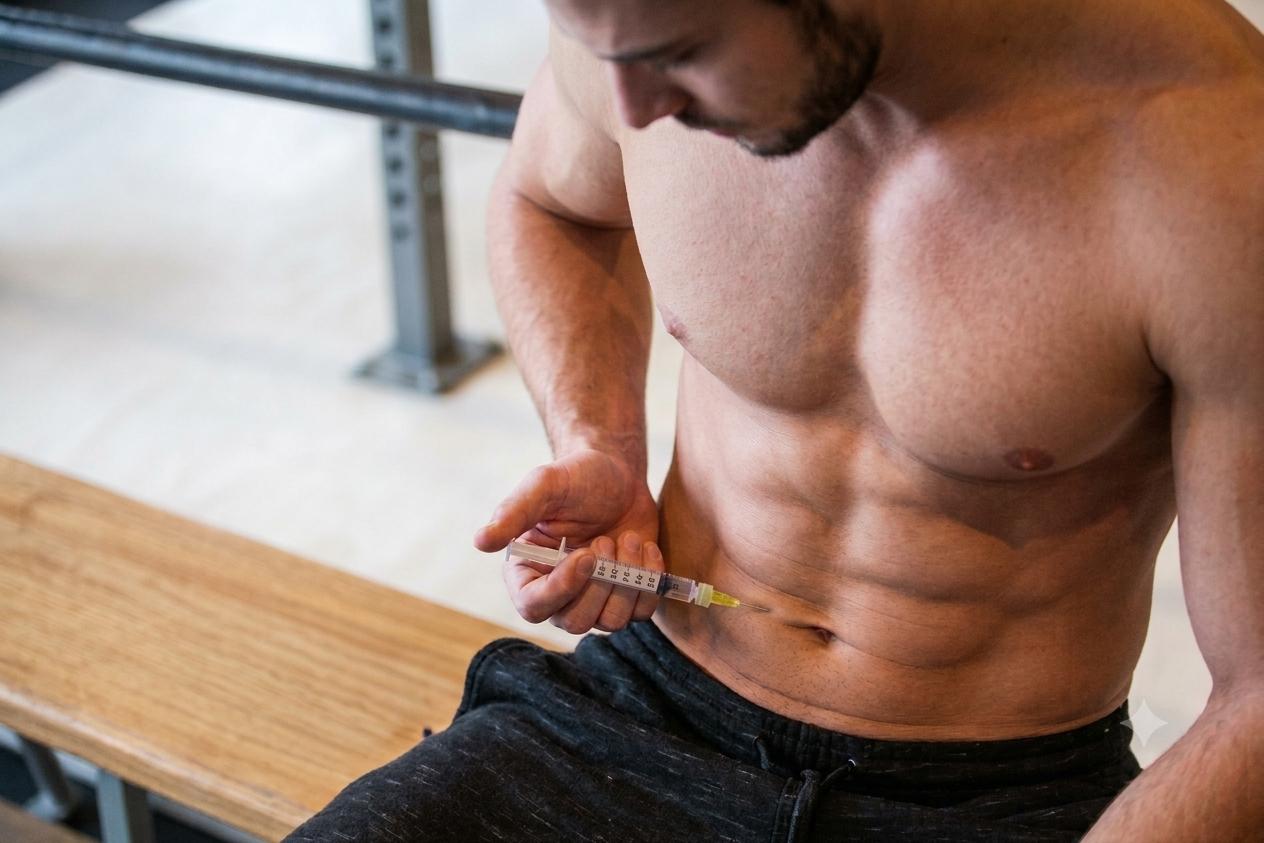
Subcutaneous injection deposits the oil into the fat layer just beneath the skin, typically at the abdomen or outer thigh. This tissue is less vascularized than muscle, so absorption is slower and more gradual. The result is a flatter hormone curve: a lower peak and a higher trough compared to the same dose given intramuscularly.
A 2017 study in the Journal of the Endocrine Society examined weekly subcutaneous testosterone in patients with documented therapeutic levels. Serum concentrations remained within the therapeutic range throughout the injection interval, without the rise-and-fall pattern associated with IM delivery. That stability is the main clinical argument for SubQ on frequent-dosing protocols.
The target layer sits 0.25 to 0.5 inches below the skin surface. SubQ needles are therefore shorter and finer: 25 to 27 gauge, up to five-eighths of an inch long. Volumes per injection are smaller as well, generally 0.2 to 0.5 mL, which reduces discomfort at each administration.
Key Differences: Peaks, Troughs, Hematocrit and Estradiol
Choosing between subcutaneous vs intramuscular testosterone injections involves four parameters that differ between routes in ways that matter for long-term management.
Testosterone Peak and Trough
IM produces a sharper peak and steeper trough over the injection interval. SubQ produces a flatter curve for the same weekly dose. Patients on once-weekly IM near their trough may notice returning fatigue or mood shifts before the next injection. SubQ at twice-weekly intervals tends to keep levels more consistent across the dosing period.
Hematocrit
Testosterone stimulates red blood cell production through erythropoietin signaling, and elevated peak concentrations amplify this effect. A 2022 Journal of Urology study found greater hematocrit rises with intramuscular testosterone than with subcutaneous testosterone delivered via autoinjector. The autoinjector was designed specifically to reduce peak concentration.
SubQ does not eliminate hematocrit elevation as a monitoring concern. However, its flatter peak may reduce the degree of rise in patients who are sensitive to this effect.
Estradiol
Testosterone aromatizes to estradiol at a rate that is partly concentration-dependent. Higher peaks produce greater aromatization in some patients. The 2022 Journal of Urology study found lower post-therapy estradiol levels in the subcutaneous group, consistent with its lower peak concentration.
Estradiol varies widely between individuals on both routes. Lab monitoring, not route selection, is the primary management tool.
Local Reactions
SubQ injections occasionally produce small nodules at the injection site. This typically occurs when volume is too large for the site or depth is inconsistent. These reactions resolve without treatment in most cases. Rotating sites and keeping volumes within the subcutaneous range minimizes their frequency. IM carries its own risk of scar tissue with repetitive use of the same site; rotation applies equally to both methods.
Practical Comparison: Frequency, Volume, Needle Size and Self-Injection Ease
For a testosterone injection methods comparison that extends beyond absorption profiles, four practical parameters shape the self-injection experience.
| Parameter | Intramuscular (IM) | Subcutaneous (SubQ) |
| Needle gauge | 21–23 gauge | 25–27 gauge |
| Injection depth | 1–1.5 inches | 0.25–0.5 inches |
| Volume per injection | 0.5–1.5 mL | 0.2–0.5 mL |
| Self-injection access | The gluteal site requires flexibility to reach independently | The abdominal site is easy to see, pinch, and inject |
The finer SubQ gauge reduces discomfort per injection. The shallower depth requires less precision. Because SubQ volume is smaller, SubQ protocols typically divide the weekly dose across two or more injections rather than a single larger shot. The abdominal site also provides direct visual feedback that most gluteal IM sites do not.
For the factors that influence injection interval decisions, the article on how often to inject testosterone covers them in detail.

Who Might Prefer Subcutaneous and Who Might Prefer Intramuscular
The question of subq vs im testosterone which is better, cannot be answered universally. Both methods produce equivalent therapeutic outcomes when dose and frequency are appropriately matched.
Subcutaneous may be worth discussing with a licensed nurse practitioner if you:
- Inject twice weekly or more frequently and prefer a finer needle and smaller volume
- Have difficulty reaching the gluteal site independently due to anatomy or flexibility
- Show elevated hematocrit or estradiol on IM and want to explore a flatter absorption profile
- Find the abdominal injection site easier to control during self-administration
Intramuscular may remain the preferred choice if you:
- Use a once-weekly or biweekly protocol with larger injection volumes
- Tolerate IM well without significant symptom fluctuation between doses
- Prefer the higher post-injection peak pattern in the first days after injection
Route selection is a clinical decision that belongs to the patient and their licensed provider. The overview of testosterone replacement therapy methods and approaches covers how different delivery formats are evaluated clinically.
Common Questions and Misconceptions
“SubQ doesn’t work as well because it’s not going into the muscle.” Both routes release testosterone from the same oil depot into the bloodstream. Subcutaneous vs intramuscular testosterone comparisons show equivalent total hormone exposure; what differs is absorption kinetics, not efficacy. The 2022 PMC clinical review confirmed that SubQ produces physiologic testosterone levels and is a safe, established alternative.
“IM gives bigger muscle gains on TRT.” At therapeutic doses, the delivery method does not determine muscle response. Androgenic effects result from testosterone binding to androgen receptors in muscle tissue regardless of how the hormone entered circulation.
“SubQ is experimental.” The Endocrine Society testosterone therapy guidelines recognize SubQ as an established route for self-injection. Evidence supporting subcutaneous testosterone administration spans decades of clinical use.
Frequently Asked Questions
Q: Is subcutaneous testosterone as effective as intramuscular?
A: For most patients, yes. Both routes produce therapeutic testosterone levels when dose and frequency are correctly matched. A 2022 PMC clinical review confirmed that subcutaneous injectable testosterone generates stable, physiologic concentrations. Total bioavailability is comparable between the two methods; what differs is the peak-to-trough ratio.
Q: Does subcutaneous injection cause more lumps or reactions?
A: Nodules can occur when injection volume is too large or depth is inconsistent. They are generally temporary and resolve within a few days. Rotating injection sites and keeping volumes within the appropriate subcutaneous range minimizes their frequency. IM also carries a risk of localized scar tissue with repetitive use of the same site.
Q: Can I switch from intramuscular to subcutaneous injection?
Switching routes is a clinical decision, not a self-directed one. Because SubQ and IM produce different absorption curves, a route change may require adjusting dose or frequency. A licensed nurse practitioner will review your protocol, order post-switch labs, and make necessary adjustments. Do not change injection technique without first discussing it with your provider.
Q: Which injection method is easier to do at home?
SubQ is generally considered easier by most patients who have tried both. The abdominal site is easy to see and reach. The shorter needle requires less depth precision, and a smaller volume reduces resistance during injection. Some patients find a well-practiced IM technique equally manageable after adequate training.
Q: Does the injection method affect estradiol or hematocrit levels?
It may, for some patients. Research comparing intramuscular vs subcutaneous TRT delivery found IM associated with higher post-therapy estradiol and hematocrit. This is consistent with its higher peak testosterone concentration. Switching route or increasing injection frequency are options worth discussing with a licensed nurse practitioner. Lab monitoring is the mechanism that makes these adjustments possible; neither route removes the need for regular blood work.
The evidence on subcutaneous vs intramuscular testosterone injections supports both methods when correctly managed. Beyoung Health provides online assessment and lab requisitions through licensed nurse practitioners. Lab testing is required before any prescription is issued, and follow-up requisitions are included in the ongoing care plan.
This content is for informational purposes only and does not constitute medical advice. Consult a licensed provider before starting, adjusting, or stopping any hormone therapy.
References
- Serum Testosterone Concentrations Remain Stable Between Injections in Patients Receiving Subcutaneous Testosterone — PMC / Journal of the Endocrine Society
- Testosterone Therapy With Subcutaneous Injections: A Safe, Practical, and Reasonable Option — PMC
- Subcutaneous vs Intramuscular Testosterone: Comparative Outcomes in Hypogonadal Men — Journal of Urology
- Testosterone Therapy Clinical Practice Guidelines — Endocrine Society