
Difference Between Testosterone Replacement Therapy and Steroid Abuse
Maintaining the right balance of hormones is essential for overall health, especially in men. Testosterone, often called the “male hormone,” plays a crucial role in everything from muscle mass to mood regulation. But when testosterone levels drop, many people look for ways to boost their levels. Testosterone replacement therapy (TRT) is a medically approved option that many men use to manage clinically low testosterone. However, there’s often confusion between TRT and anabolic steroid abuse, with some mistakenly believing they are the same. In reality, they serve different purposes and come with very different health risks.
Yes, testosterone is an anabolic steroid, and Canadian law lists it as one. So the useful comparison is not TRT versus steroids. It is TRT vs. steroid abuse. Replacement therapy uses a prescribed dose, aimed at what your own body would normally make, and blood work checks it. Steroid abuse uses unprescribed doses many times higher, from an unregulated supply. The aim there is to push muscle and look past a natural ceiling. Same hormone family, opposite intent, very different risk.
TRT vs. Steroid Abuse: The Differences at a Glance
Two questions, two answers. Replacement asks what your body is missing. Performance use asks how far past normal it can be pushed. For the narrower question of whether the hormone itself counts as a steroid, see is TRT therapy considered a steroid.
The Comparison in One Table
| Compared on | Testosterone replacement therapy | Anabolic steroid abuse |
|---|---|---|
| Goal | Return a measured deficiency to a normal range | Push muscle, strength or appearance past a natural ceiling |
| Who it is for | Men with hypogonadism confirmed on repeat early-morning blood tests | No diagnosis involved |
| Dose | Set to approximate what the body would normally produce | Reported at many times normal production |
| Who sets the dose | A prescriber, adjusting on blood results | The user, often on peer advice |
| Blood monitoring | Testosterone, hematocrit and PSA on a fixed schedule | None |
| Where the product comes from | Licensed pharmacy supply | Unregulated supply, contents and strength unverified |
| Legal status in Canada | Legal with a prescription | Schedule IV controlled substance |
| Your own production | Suppressed during treatment, expected and managed | Suppressed, with recovery afterwards uncertain |
| Fertility | Sperm output falls, and this is discussed before starting | Sperm output and testicular volume fall, sometimes for years |
| Heart findings | No rise in major cardiac events in a large trial of men already at risk | Reduced pumping function and more coronary plaque in long-term users |
Understanding Testosterone Replacement Therapy (TRT)
Testosterone Replacement Therapy (TRT) is a medically supervised treatment for men with low testosterone levels. Unlike anabolic steroids, which are often used in much higher, non-therapeutic doses for performance enhancement and rapid muscle gain, TRT is intended to restore testosterone levels to a normal physiological range under medical supervision to alleviate the symptoms of Low T.
TRT is typically prescribed after a thorough medical examination, and blood tests confirm that testosterone levels are below the normal range. This therapy aims to bring testosterone levels back into balance, relieving symptoms like fatigue, depression, and loss of muscle mass.
How Does TRT Work?

Testosterone Replacement Therapy (TRT) works by supplementing the body with testosterone through controlled and medically supervised methods. The primary goal of TRT is to bring testosterone levels back into a healthy range, addressing the symptoms caused by low hormone levels.
Potential Side Effects of TRT
While TRT is generally considered safe when administered under medical supervision, there are some potential side effects, including:
- Acne or Skin Irritation: Some men may experience skin reactions, particularly with topical gels or patches.
- Sleep Apnea: Testosterone can worsen sleep apnea in some individuals, leading to disrupted sleep patterns.
- Increased Red Blood Cell Count: TRT can increase the number of red blood cells in the body, which may elevate the risk of blood clots.
- Prostate Health: Larger recent trials have not shown a clear rise in prostate cancer, though they were not designed to settle that question. PSA monitoring is still part of standard care.
These risks underscore the importance of using TRT only under the care of a healthcare professional who can monitor for potential side effects.
What Are Anabolic Steroids?
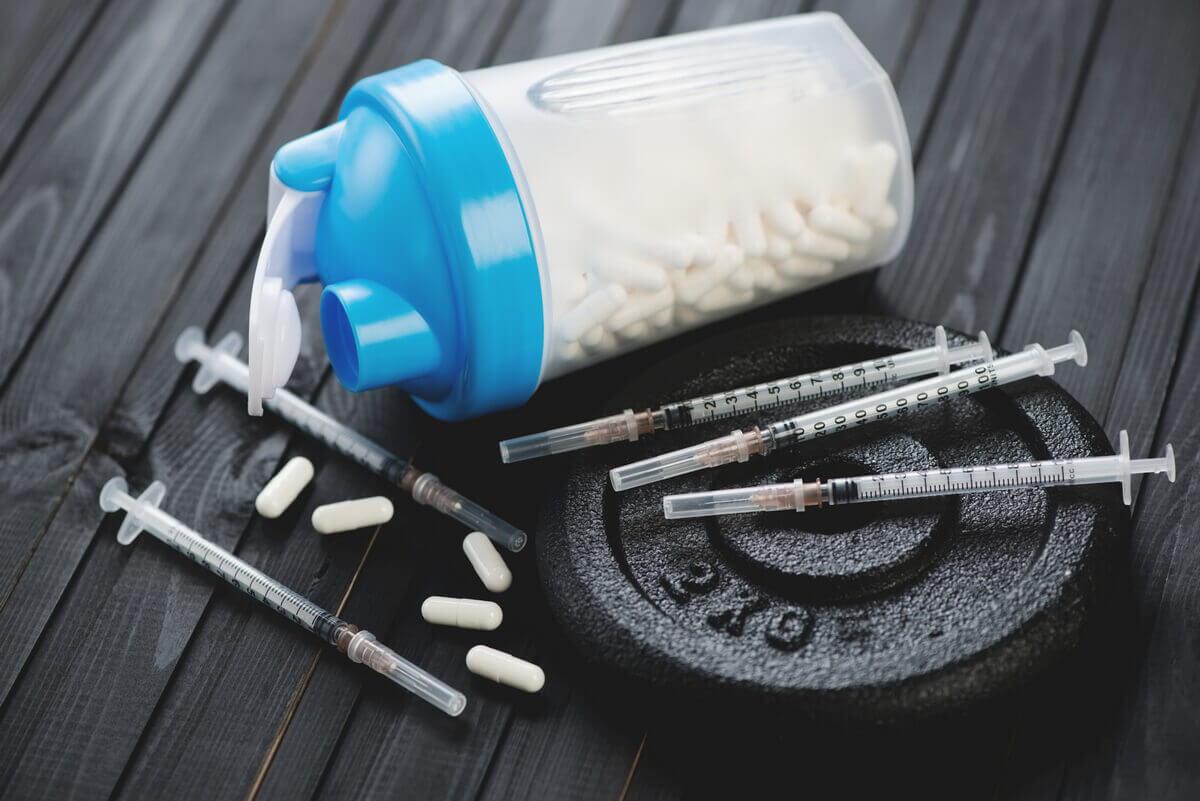
Anabolic steroids, often just called steroids, are synthetic substances designed to mimic the effects of testosterone in the body. Anabolic steroids are a family that includes testosterone itself, along with synthetic derivatives altered to change how strongly or how long they act.
Steroids are used in medical settings to treat conditions like delayed puberty, muscle loss due to disease, and other hormone-related issues. However, they are most well-known for their illegal use in sports and bodybuilding.
Steroid Use for Performance Enhancement
Many athletes and bodybuilders use anabolic steroids to increase muscle mass and strength. These drugs can significantly enhance physical performance, allowing individuals to train harder and recover faster. However, these effects come at a cost, and the misuse of steroids is illegal in most sports.
Dose Is Where TRT and Steroid Abuse Separate

What Replacement Aims At
Every row in the table above follows from this one. The Endocrine Society stated the target plainly on 16 July 2026. Replacement is given “at a dosage that is similar to what a man would typically make”. So the goal is an ordinary reading, not a high one. A prescriber works backwards from your blood results. The dose is then adjusted until the number sits where it sat before the deficiency. None of that is designed to take you past your own biology. Our own testosterone replacement therapy programme works to that standard, and the benefits of testosterone replacement therapy for men are framed against it.
What Performance Dosing Aims At
Performance use starts from the opposite premise. In 2019 the Journal of Clinical Endocrinology and Metabolism reviewed this literature. It describes the landmark muscle-building trial as delivering roughly “10 to 12 times the normal daily production rate”. A dose-response study in the American Journal of Physiology went further. It tested weekly doses across a twenty-four-fold range. The men’s own production was suppressed first, so the doses were all that varied. Lean mass barely shifted at the two lowest doses. It climbed only once the doses moved well above replacement territory. What that means for a patient on replacement is covered in TRT for muscle gain.
Why the Same Hormone Behaves Differently
Dose changes what a hormone does. At replacement levels, testosterone restores signalling the body has lost. Well above that, the surplus spills into other systems: red blood cell production, blood lipids, the thickness of cardiac muscle. That 2019 review draws the line in its own words. Replacement is “an attempt to restore an individual to a ‘normal’ state”. Performance dosing aims “to achieve effects above an individual’s baseline, eugonadal state”.
Health Risks of Steroid Abuse
The misuse of anabolic steroids can lead to a wide range of dangerous health effects, many of which are irreversible. Some of the most common risks associated with steroid abuse include:
What Long-Term Misuse Does
- Heart Problems: Steroid abuse can increase the risk of heart attacks and strokes by elevating cholesterol levels and increasing blood pressure.
- Liver Damage: Liver strain is well documented, and it is reported far more often with the oral forms than the injectable ones. Reported findings range from disturbed liver blood tests to cyst formation.
- Hormonal Imbalance: Using high doses of steroids can disrupt the body’s natural production of hormones, leading to long-term imbalances. In men, this can result in testicular shrinkage, infertility, and breast development (gynecomastia).
- Psychological Effects: Steroid users often experience mood swings, aggression, and even depression. Long-term use has been linked to conditions like paranoia and delusional behavior. These psychiatric symptoms, often referred to as “roid rage,” can be severe and contribute to aggressive or even violent behavior in some users.
Steroid abuse may offer quick muscle gains, but the risks far outweigh the benefits.
That is also where the terminology question usually lands: if testosterone is itself a steroid, what makes therapy different? The short answer is dose, purpose, and oversight, and the longer one is in is TRT therapy considered a steroid.
Steroid Abuse Can Cause the Deficiency TRT Treats
Your Own Production Switches Off
A loop connects the brain to the testes. Androgen arriving from outside the body breaks that loop. The pituitary reads the surplus as a reason to stop sending LH and FSH. Without those signals the testes stop making testosterone, stop making sperm, and lose volume. The 2019 review in the Journal of Clinical Endocrinology and Metabolism states it directly. Exogenous use “suppresses endogenous testosterone production and spermatogenesis in men”. Many men are infertile for as long as they keep using.
Recovery Is Likely, Not Guaranteed
A 2023 scoping review in Endocrine Connections examined what happens after people stop. Its finding on the pituitary hormones is reassuring. Full recovery inside three to six months is described as highly likely. Its finding on testosterone itself is more careful. The review reports near-complete recovery over months, then adds that full recovery is uncertain. Testicular volume and sperm output are slower again, with near-full recovery expected over months to years. Whether fertility comes back is its own question, covered in restoring fertility after treatment.
That timeline matters in practice. Some men who ask us about low testosterone are living with the consequences of a cycle they finished years ago. Clinically that is a different picture from age-related testosterone decline, even when the blood result looks the same.
The Legal and Medical Aspects of TRT vs. Steroid Abuse

One of the biggest differences between testosterone replacement therapy and steroid abuse is the legal and medical context. TRT is a legitimate medical treatment that is prescribed by doctors and regulated to ensure patient safety. Steroid abuse, on the other hand, is illegal in most countries and sports organizations due to its harmful effects and potential for abuse.
TRT: A Legal and Regulated Treatment
In most places, TRT is only available with a prescription. The testosterone used in TRT comes from reliable medical sources and is carefully dosed to avoid complications. Physicians monitor patients regularly to ensure that hormone levels are balanced and side effects are minimized.
Steroid Abuse: Illegal and Dangerous
Anabolic steroids are classified as controlled substances in many countries, meaning their use is restricted outside of a medical context. When obtained illegally, steroids often come from unreliable sources, increasing the risk of contamination and incorrect dosing. The lack of medical supervision makes steroid abuse highly dangerous.
Explore coming off testosterone.
What Medical Supervision Actually Involves

Supervision is the word most often used to separate therapy from misuse. It usually goes undefined. Here is what it contains.
Before a First Prescription
The Endocrine Society’s July 2026 statement asks for a diagnosis “based on at least two early-morning, fasting testosterone tests”. It also warns that “symptoms alone are not diagnostic of hypogonadism”. Low energy, low libido and low mood are common, and they have many causes. Canadian Urological Association guidance sets the blood draw between 7 and 11 am. It treats a total testosterone below 10 nmol/L as a reasonable diagnostic threshold. Which number gets measured also matters, as total versus free testosterone explains. Where excess weight is the only cause identified, weight loss is the usual first step. The Endocrine Society is explicit about that ordering.
Practice does not always match the guidance. At ENDO 2026, researchers reviewed 200 men who began testosterone at one American academic health system. The period covered was 2020 to 2025. Only 12% had two low morning readings, LH or FSH measured, and no contraindication. That is a reason to ask which clinician handles low testosterone and how they work up a diagnosis.
Once Treatment Starts
The Canadian Urological Association monitoring schedule reviews symptoms and serum testosterone at baseline, three months, six months, then yearly. Hematocrit and PSA are checked at baseline, three months and six months. A digital rectal examination is done at baseline and yearly. A hematocrit that stays at 55% or above prompts action. That may mean a lower dose, a pause, a change of formulation, or phlebotomy. The wider safety picture sits in is testosterone replacement therapy safe, the practical side in managing potential side effects, and the prostate question in prostate cancer concerns and TRT.
None of that exists in unsupervised use. That absence, rather than the hormone itself, is what makes the two risk profiles diverge.
TRT vs Steroid Abuse: What It Comes Down To
Understanding the difference between testosterone hormone replacement therapy and steroid abuse is crucial for anyone considering testosterone-related treatments. While TRT is a medically supervised solution for low testosterone, steroid abuse involves using anabolic steroids in unsafe, often illegal ways to enhance muscle growth and performance. TRT offers a controlled, safe way to restore normal testosterone levels, improving men’s health and quality of life. On the other hand, steroid abuse poses significant risks to both physical and mental health, making it a dangerous practice.
If you believe you have low testosterone, always consult a healthcare professional at Beyoung.Health to determine the best course of treatment. Avoid the temptation of quick fixes like anabolic steroids, which carry long-term health risks.
Get Your Level Checked Properly
Low testosterone is a diagnosis, made on repeat morning blood tests rather than on a symptom list. Has your energy, libido or recovery changed? Our clinical team can arrange the testing. We will also explain what the result does and does not mean, including how long treatment usually continues if you do start. If you are in British Columbia, TRT in Vancouver covers what the programme includes, and you can book a consultation from there.
Medical Disclaimer
This content is for informational purposes only and does not constitute medical advice. Consult a qualified healthcare provider before starting any treatment.
TRT vs. Steroid Abuse: Common Questions
Q: Is TRT the same as steroid abuse?
No. Testosterone is an anabolic steroid, so the two do overlap chemically. Beyond that they diverge on dose, purpose, supply and supervision. Replacement aims at a normal blood level, monitored by a prescriber. Steroid abuse aims well above normal, with none of that in place.
Q: Is testosterone a steroid?
Yes. Testosterone is a steroid hormone. Canada’s Controlled Drugs and Substances Act names it in Schedule IV, among anabolic steroids and their derivatives. Being a steroid describes chemistry and legal class. It says nothing about how a treatment is used.
Q: Can past steroid use cause low testosterone?
It can. Androgen from outside the body suppresses the pituitary signals that drive your own production. A 2023 review in Endocrine Connections found recovery after stopping is likely over months, though not certain to be complete. Testicular volume and sperm output can take months to years.
Q: Who is eligible for testosterone therapy for men?
Testosterone therapy is generally considered for men with low levels confirmed on repeat early-morning blood tests. Symptoms such as persistent fatigue or reduced libido usually need to be present too. A prescriber also checks for causes worth treating first and for conditions that rule treatment out.
Q: Are there any side effects of testosterone replacement therapy?
Yes. Reported effects include acne or skin irritation, fluid retention, a rise in red blood cell count, reduced sperm production, and worsening of sleep apnea in some men. Monitoring exists to catch these early. That is what the blood work schedule is for.
Q: What are the dangers of steroid abuse?
Long-term users show reduced heart pumping function and more coronary plaque than weightlifters who do not use. Fertility is suppressed, the liver can be strained, and mood disturbance ranges from irritability to psychotic symptoms in severe cases. Some cardiac changes may improve after stopping. Some may not.
References
- Statement on Testosterone Replacement Therapy, 16 July 2026 — Endocrine Society
- Canadian Urological Association Guideline on Testosterone Deficiency in Men: Evidence-Based Q&A — CUA
- Diagnosis and Management of Anabolic Androgenic Steroid Use — Journal of Clinical Endocrinology and Metabolism
- Testosterone Dose-Response Relationships in Healthy Young Men — American Journal of Physiology: Endocrinology and Metabolism
- Cardiovascular Safety of Testosterone-Replacement Therapy — New England Journal of Medicine
- Cardiovascular Toxicity of Illicit Anabolic-Androgenic Steroid Use — Circulation
- Anabolic-Androgenic Steroids Induced Cardiomyopathy: A Narrative Review of the Literature — Biomedicines
- Physical, Psychological and Biochemical Recovery from Anabolic Steroid-Induced Hypogonadism: A Scoping Review — Endocrine Connections
- Controlled Drugs and Substances Act, Schedule IV — Justice Laws Website, Government of Canada
- Advisory: Unauthorized Health Products May Pose Serious Health Risks — Health Canada